
New Orleans & Jefferson Parish water
Whole House Water Filter for City Water
A whole house water filter for city water is optional: it mainly changes taste, smell and the chloramine in every tap, so buy one for comfort, check its certified claims, and use a separate certified filter for lead.
Disclosure: SoftPro Water Systems, a store owned by the same team as this site, sells the filters and softeners we link to. Our water pages follow the utilities' 2025 water quality reports and federal and state agency guidance, checked October 2026. Store descriptions are reported as the store's own claims. Ownership disclosure
View at SoftPro Water Systems
On this page
Key takeaways
- City water that meets EPA standards, chloramine included, is safe to drink without a filter, lead from home plumbing aside (EPA).
- A whole-house carbon filter is a taste, odor and chloramine choice; East Bank New Orleans water averaged 3.3 ppm chloramine in 2025.
- The EPA says monochloramine is harder to remove than chlorine and that boiling, standing and reverse osmosis do not remove it.
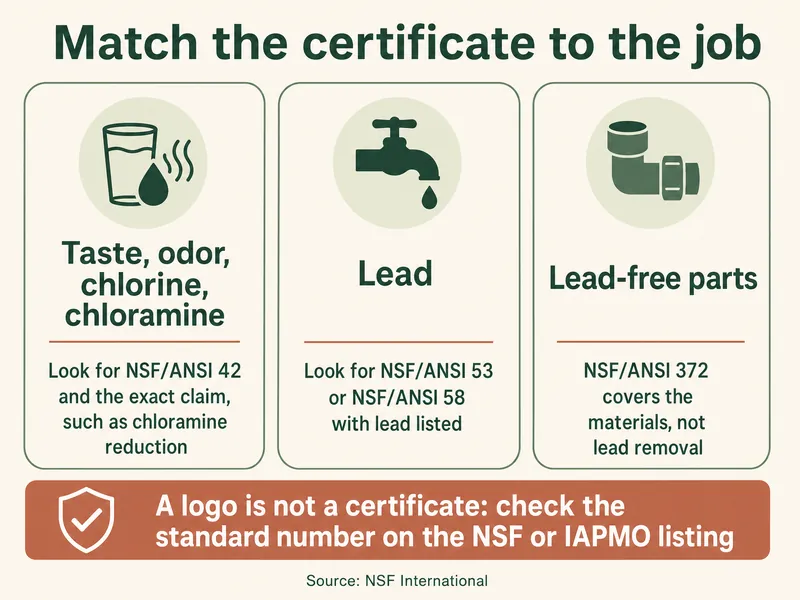
- Check the standard number: NSF/ANSI 42 for taste, odor and chloramine claims; NSF/ANSI 53 or 58 for lead (NSF).
- In New Orleans, plumbing permits are issued by the Sewerage and Water Board and only a licensed master plumber may apply (City of New Orleans).
- No whole-house filter fixes a boil water advisory; follow the utility's notice.
Do you need a whole house water filter on city water?
No, most city water customers do not need one. Treated water that meets federal standards is safe to drink, lead from home plumbing aside, and the EPA says chloraminated water within its limits is safe for drinking, cooking and bathing. A whole house filter is something people choose for the taste and smell of every tap, the feel of shower water, or simply preference.
There are a few cases where treatment is a real need, but they are usually met at one point rather than the whole house. Fish tanks need chloramine neutralized, which an aquarium conditioner does. Home dialysis machines need chloramine removed, which the dialysis provider handles. Lead, if it is a concern, comes from service lines and fixtures and is best handled by a filter certified for lead at the kitchen tap, as the lead in drinking water guide explains.
A whole house filter also does nothing for a boil water advisory. Advisories follow pressure drops and other distribution problems, and the right response is the utility's instructions; see the boil water advisory guide.
What does a whole house filter remove?
A whole house filter removes only what its media and certification say it does, so the claim on the listing matters more than the label on the box. On city water, the usual targets are the disinfectant's taste and smell, chloramine and fine sediment. The chloramine guide explains what chloramine is and why New Orleans uses it.
| Concern on city water | Typical choice | Certification to look for | Is it needed? |
|---|---|---|---|
| Chloramine or chlorine taste and smell | Whole-house carbon filter | NSF/ANSI 42, with chloramine reduction named | Optional comfort choice |
| Fish tank or pond | Aquarium water conditioner | Product label naming chloramine | Yes, for the fish |
| Lead at the kitchen tap | Point-of-use filter or reverse osmosis | NSF/ANSI 53 or 58, with lead named | Worth weighing if you have a lead line or old fixtures |
| Spotting and scale | Softener or salt-free conditioner | Maker's capacity and flow ratings | Optional at 4–6 gpg |
| Boil water advisory | None | n/a | Follow the utility |
Hardness is a separate job. A carbon filter is sold to reduce taste, odor and disinfectants, not to soften; the water hardness page has the local numbers, and they are moderately hard rather than hard.
Why does chloramine need catalytic carbon?
Chloramine is harder to take out than chlorine, which is why filters sold for it make a specific claim. The EPA's monochloramine removal sheet says it "can be more difficult to remove from drinking water than chlorine", that boiling and standing do not remove it, and that reverse osmosis filters do not either. The EPA does not certify home filters itself; it points buyers to NSF/ANSI 42 listings.
Many whole-house filters sold for chloramine use catalytic carbon. The media name alone does not prove performance: NSF's chloramine reduction listing shows which models have been certified for that claim. If a product shows logos but no standard number and no named claim, ask the seller for the certificate.
How do you size a whole house filter?
Size a whole house filter to the house's peak flow, which tracks the number of bathrooms and fixtures running at once. Makers express this as a service flow rate in gallons per minute or as a bathroom count. Too small a unit can drop water pressure when two showers and a washing machine run together, and can also cut contact time with the media.
Store and maker sizing varies in how it is stated. The SoftPro carbon filter, for example, is sold in one 1.5 cubic foot size that the store rates for 1 to 6 bathrooms, and its page gives no gallons-per-minute figure. The same store sizes its salt-free conditioner by flow instead (6 GPM for about 1 to 2 bathrooms). When a listing gives only a bathroom count, ask for the rated flow before buying.
The filter also has to fit the plumbing. Whole-house units go on the main line after the meter, so pipe size, a bypass valve and floor space near the main shutoff all matter. In New Orleans, the city's permit guide says a permit is needed to remove or replace water piping or fixtures, that permits come from the Sewerage and Water Board, and that only an Orleans Parish licensed master plumber may apply. The Louisiana plumbing code page covers the wider rules.
Which certifications should a filter carry?
The certification should name both the standard and the contaminant. For lead, NSF asks buyers to look for NSF/ANSI 53 or 58 on the product; chloramine reduction is an NSF/ANSI 42 claim. NSF/ANSI 372 is different: it covers lead-free materials in the product itself and is not a lead reduction claim.
IAPMO and WQA also certify water treatment products to the same NSF/ANSI standards. Whichever body did the testing, the listing should show the exact model, the standard and the claim. A row of logos on a product page is not the same thing, and neither is a "tested to" statement without a certificate.
What to check on city water
- 4 mg/LEPA limit for chloramine as a running annual averageEPA
- 3.3 ppmYearly chloramine average on the East Bank in 2025 (Carrollton plant's highest)Louisiana Department of Health
- 42NSF/ANSI standard for chloramine reduction claimsNSF
- 53 or 58NSF/ANSI standards a filter must name to show it reduces leadNSF
What does a whole house filter cost to run?
Running costs are the purchase, the installation, the replacement media and any pre-filter cartridges. Installation by a licensed plumber is a separate quote, and this site does not print local prices.
As one example of the figures to ask for, the SoftPro Chlorine+ Carbon Whole House Filter (sold by SoftPro Water Systems, a store we own) is listed at $1,097 on the store's page (October 2026). The store states that its media is tested to treat 600,000 to 1,000,000 gallons under typical conditions, lasting up to 6 to 10 years, that the unit needs no power and sends no water to a drain, and that its sediment pre-filter cartridge should be changed "usually every three months under normal city water conditions". Those are the store's own claims, and the page lists chloramine among what the filter is designed to reduce without naming an NSF/ANSI standard number. The store page showed both an in-stock note and a sold-out label when checked, so confirm availability. It is an option to try if chloramine taste bothers you, not something city water requires.
Try it on city water
SoftPro Chlorine+ Carbon Whole House Filter
Tap water that meets federal limits is safe to drink without a filter; a catalytic carbon whole house filter is a taste, odor and chloramine choice for the whole house. Check the size, current price and the maker's performance claims at SoftPro Water Systems. See who needs chloramine removed.
View at SoftPro Water SystemsSoftPro Water Systems, a store owned by the same team as this site, sells the filters and softeners we link to. Ownership disclosure
How we put this page together
This page draws on the EPA's chloramines guidance and monochloramine removal sheet, NSF's lead and chloramine-reduction listings, the city's guidelines for building permits, the 2025 Carrollton Water Works report from the Louisiana Department of Health, and the store's product listings (dates checked: October 2026). Store figures are reported as the store's claims. Installation prices, contractor quotes and product trials were left out.
Common questions
Will a whole house filter lower water pressure?
It can if the unit is undersized for the house's peak flow or the media or pre-filter is clogged. Ask for the rated service flow in gallons per minute and change cartridges on schedule.
Should a whole house filter go before or after a water softener?
Makers usually specify the order in their installation manuals, so follow the manuals for the two units you buy. A licensed plumber can plan the layout on the main line.
Does a whole house filter remove lead?
Only if that exact model carries an NSF/ANSI 53 or 58 listing that names lead. For drinking water, a certified filter at the kitchen tap is the simpler way to cover lead.
Is a whole house filter worth it on New Orleans water?
It depends on what bothers you. If the chloramine smell or taste is the issue, a carbon unit addresses it; if not, the water is safe without one, and a pitcher or faucet filter is a lower-cost way to try filtered water first.
Does a whole house filter work during a boil water advisory?
No. Boil water advisories are about possible germs after a pressure loss, and the CDC and the city say to boil water for drinking until the advisory is lifted.
Do whole house filters remove fluoride?
Only if fluoride appears among the product's certified claims, so check the listing. For reference, East Bank water listed fluoride at 0.7 ppm in 2025.
Where should a whole house filter be installed?
On the main water line after the meter and before the water heater, usually with a bypass valve so the filter can be serviced without shutting off the house.
Related guides

More guides: the Below the Slab home page.