
Slab leaks
Slab Leak Repair Cost: What Each Fix Runs
Slab leak repair cost runs about $1,000 to $4,000 in Fixr's 2025 national estimate, but for Gulf South slab houses, tunneling, rerouting and flooring can move the total well outside that range.
On this page
Key takeaways
- Most slab leak repairs cost $1,000 to $4,000 (average $2,500) in Fixr's national guide of May 2025; Bob Vila's 2024 guide gives $630 to $4,400.
- Finding the leak comes first and is billed separately: $100 to $400 nationally (Fixr, May 2025).
- Tunneling under the house runs $900 to $2,000 per complete job in Fixr's estimate; no reliable per-foot figure exists.
- Rerouting lines out of the slab costs $4,000 to $15,000 nationally (Fixr), more than one spot repair but often less than a second and third leak.
- Replacing water piping in New Orleans takes a permit, and the Orleans Parish-licensed master plumber on the job files for it (City of New Orleans).
- Homeowners policies may cover water damage from a sudden discharge, but the Louisiana Department of Insurance notes exclusions such as earth movement.
How much does slab leak repair cost?
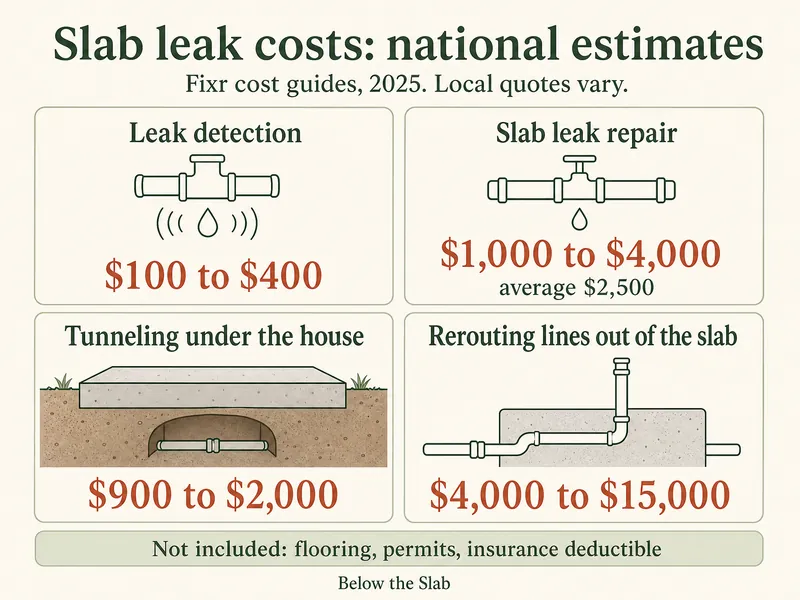
Slab leak repair costs about $1,000 to $4,000 for most jobs, with an average of $2,500, according to Fixr's national cost guide updated May 1, 2025. Bob Vila's guide, updated May 29, 2024, gives a wider range of $630 to $4,400. Both are national contractor-survey estimates, not prices for any one city; local quotes vary.
Those ranges describe a typical single repair. The bill depends mostly on how the plumber reaches the pipe and what has to be put back afterward. Four approaches cover most jobs:
| Repair | What it involves | National estimate | Main cost drivers |
|---|---|---|---|
| Spot repair through the slab | Cut the floor over the leak, replace the bad section, patch the concrete | $1,000-$4,000 for slab leak repair overall (Fixr, May 2025) | Floor covering, depth, access inside the house |
| Tunneling under the slab | Dig from outside the foundation to the pipe, repair it, backfill | $900-$2,000 whole job (Fixr, May 2025) | Distance from the edge, soil, backfill and compaction |
| Reroute | Abandon the buried line and run a new one through walls or attic | $4,000-$15,000 (Fixr, May 2025) | Number of fixtures, wall and ceiling repair, pipe material |
| Repipe | Replace most or all supply lines in the house | No verified national figure | House size, number of bathrooms, drywall work |
| Leak detection (before any repair) | Meter, pressure, acoustic, thermal or tracer-gas testing | $100-$400 (Fixr, May 2025) | Methods used, how hard the leak is to find |
None of these figures includes replacing flooring, cabinets or drywall, the permit, or an insurance deductible. Ask every contractor to list what their quote leaves out.
What does a spot repair through the slab cost?
A spot repair through the slab usually falls inside the $1,000 to $4,000 national range, because it is the standard slab leak repair those guides describe. The plumber cuts or breaks an opening in the floor over the marked leak, digs down to the pipe, replaces the damaged section and fills and patches the concrete.
The price climbs with what sits on top of the slab. Bare concrete or a garage floor is cheapest to open. Tile, hardwood and built-in cabinets cost more to remove and replace, and matching discontinued tile can cost more than the plumbing. A leak under a tub or shower adds fixture removal.
A spot repair makes the most sense when the leak has been pinpointed, it is the first leak on that line, and the rest of the pipe looks sound. Accurate slab leak detection matters here: a wrong mark means a second opening.
When is rerouting cheaper than repairing?
Rerouting is cheaper over time when the buried line is likely to keep leaking, even though one reroute costs more than one spot repair. Moving the lines out of the slab runs $4,000 to $15,000 in Fixr's May 2025 figures, against $1,000 to $4,000 for one fix.
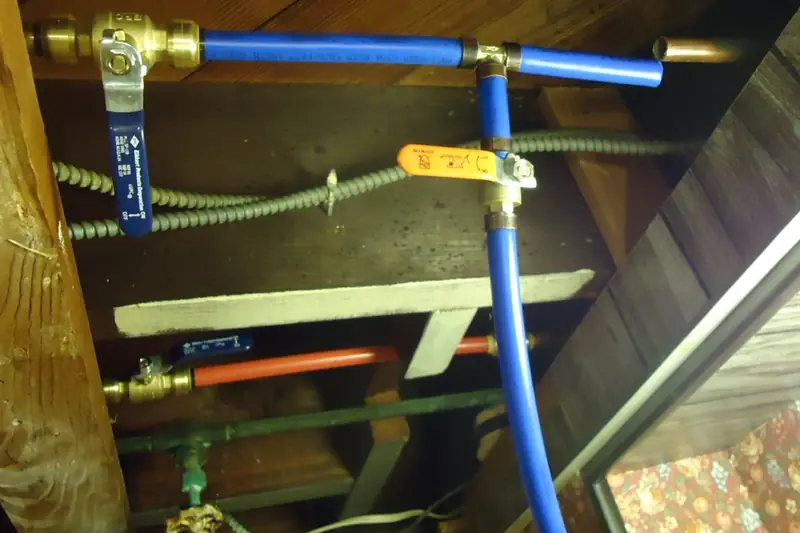
A reroute abandons the pipe under the floor and runs new line through walls, the attic or along the outside of the house. It avoids breaking the floor at all, and future leaks happen where they can be seen and reached. The cost depends on how many fixtures the line feeds, how much drywall has to be opened and patched, and the pipe material. In hot Gulf South attics, ask how the new lines will be insulated and protected.
Rerouting tends to win when the house has already had a slab leak, when copper lines are old enough to pinhole in several places, or when the leak is under a kitchen or bathroom that would be costly to open. The water line reroute page compares the two choices in more detail.
What does tunneling under the slab add?
For tunneling alone, Fixr's May 2025 survey gives $900 to $2,000 per complete job, and that is often in addition to the plumbing repair itself. No reliable per-foot price has been published, so treat any per-foot quote as the contractor's own number and ask how it is calculated.
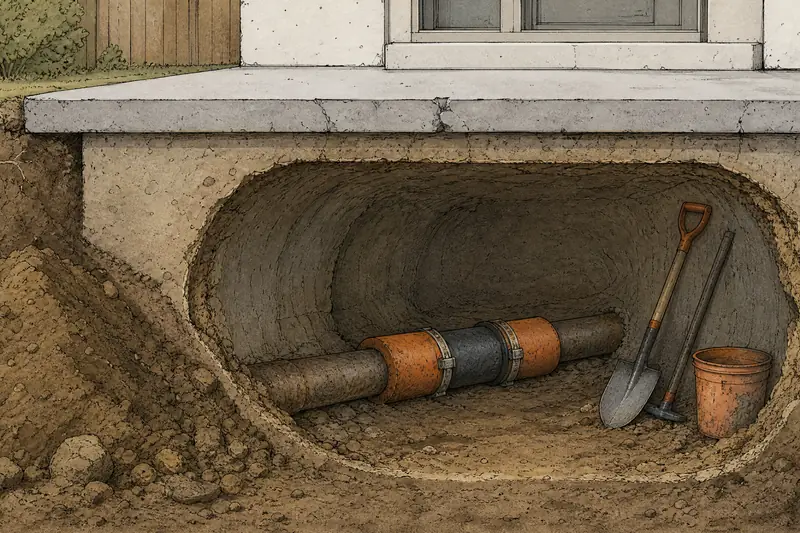
A tunnel is dug from outside the foundation to reach the pipe without breaking interior floors. It suits houses with expensive flooring, leaks near an outside wall, or drain lines that run the length of the house. Its main costs are distance from the slab edge, the soil, and backfilling and compacting the tunnel so the slab stays supported afterward.
That last step matters on soft, wet Gulf South soils. Ask how the tunnel will be backfilled, whether the soil will be compacted in layers and whether the backfill is warrantied. The tunneling under a slab page explains how tunnels are dug and closed.
Does repiping make sense after a second leak?
Repiping often makes sense after a second leak on the same system, because each new spot repair costs about as much as the first and the remaining pipe is the same age and material. No verified national price for a whole-house repipe was found, so this site does not give one.
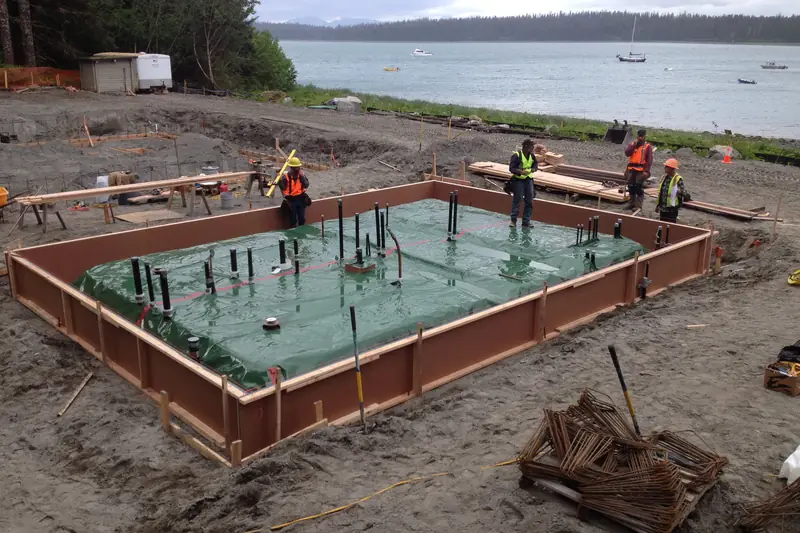
What drives a repipe quote is easy to list: the number of bathrooms and fixtures, the length of runs, whether lines go through the attic or walls, how much drywall has to be opened and patched, and the pipe material. Many repipes in slab houses are done as a reroute, abandoning the buried lines entirely.
A useful test is to add up the likely costs. If one more spot repair at national averages plus new flooring approaches the low end of a reroute quote, the larger job may be the cheaper path over the next decade. A licensed plumber can say whether the pipe that comes out shows wear along its length or only at one point.
What else adds to the repair bill?
Several costs sit outside the plumbing estimate and can match or exceed it.
- Leak detection. $100 to $400 in Fixr's national estimate (May 2025), billed before any repair.
- Flooring and finishes. Tile, hardwood, carpet, cabinets and baseboards removed to reach the pipe.
- Water damage cleanup. Drying, mold treatment and drywall replacement if the leak soaked materials.
- Permits. New Orleans requires a plumbing permit for removing or replacing water lines or fixtures. Per the city's permit guidelines, the Sewerage and Water Board (not Safety and Permits) issues it, and the filing has to be made by the job's master plumber, who must hold an Orleans Parish license (City of New Orleans). Fees and Jefferson Parish rules were not verified; ask the plumber to include the permit in the quote.
- Water lost before the repair. EPA WaterSense estimates that the average household's leaks waste more than 9,300 gallons a year (EPA WaterSense); a slab leak can add much more to the bill each month it runs.
- Foundation work. If the slab has moved, a structural engineer may need to assess it; see foundation settlement and plumbing.
Insurance can offset part of the total, depending on the policy. The state's homeowners insurance guide puts a sudden plumbing discharge among broad-form perils and lists earth movement as excluded. The NAIC consumer guide adds that a homeowners policy "isn't a maintenance contract". Washington State's insurance regulator explains the general split between sudden and gradual leaks, which policies often treat differently. Ask the insurer before work starts whether access ("tear-out") costs are covered, and read the page on homeowners insurance and slab leaks.
Plumbing licenses in Louisiana come from the State Plumbing Board of Louisiana; check a contractor's license there before signing.
National cost estimates for slab leak work
- $1,000-$4,000Slab leak repair, average $2,500Fixr, updated May 1, 2025
- $630-$4,400Slab leak repair, second national estimateBob Vila, updated May 29, 2024
- $900-$2,000Tunneling under the house, whole jobFixr, May 2025
- $4,000-$15,000Rerouting water lines out of the slabFixr, May 2025
- $100-$400Leak detection visitFixr, May 2025
How we put this page together
This page compares national contractor-survey estimates from Fixr (updated May 1, 2025) and Bob Vila (updated May 29, 2024), named and unlinked because they are not primary sources. Permit, insurance and licensing points come from New Orleans' permit guidelines, the LDI and NAIC consumer guides, Washington's insurance commissioner and the SPBLA license list, all reviewed in October 2026. Left out: HomeAdvisor and Angi figures (their pages could not be loaded), per-foot tunneling prices, whole-house repipe prices and any local New Orleans price, because none could be confirmed.
Common questions
Is it cheaper to reroute or repair a slab leak?
For one leak, a spot repair is usually cheaper: about $1,000 to $4,000 nationally versus $4,000 to $15,000 for a reroute (Fixr, 2025). After repeated leaks on the same line, the reroute often costs less over time.
Why do slab leak quotes vary so much?
Quotes differ in what they include. One may cover only the plumbing, another the concrete patch, a third flooring and permits. Compare line by line, and ask what each quote leaves out.
Does the leak detection fee count toward the repair?
Sometimes. Some contractors credit the detection fee if they also do the repair; others charge it separately. Ask before the visit and get the answer in writing.
Can a slab leak be fixed with an epoxy pipe lining?
Epoxy lining products exist for some pipes, but no primary source reviewed for this page gives costs or performance data for them in slab supply lines. Ask any contractor offering lining for the product's certification and warranty terms.
Who pays for a slab leak in a rental home?
That depends on the lease and Louisiana landlord-tenant law, which this page does not cover. Tenants should report a suspected leak to the landlord promptly and in writing.
Is the cost of breaking and patching the floor included in a slab repair quote?
Often the concrete patch is included and the floor covering is not. Ask whether the quote covers tile, wood or carpet replacement, or only the slab itself.
Do repair costs differ between hot and cold lines?
The repair method is the same, but hot-water leaks are often found sooner because they warm the floor. Cost depends more on location and access than on which line is leaking.
Related guides
More guides: the slab house plumbing guide home page.