
Slab leaks
Slab Leak: What It Is and Why It Happens
A slab leak is a leak in a water or drain pipe that runs under or inside a house's concrete slab, common on soft Gulf South soils and usually found by a moving water meter, a warm floor or a rising bill.
On this page
Key takeaways
- A slab leak is any leak in a pipe buried under or cast into a slab-on-grade foundation: a pressurized supply line or a gravity drain line.
- Parts of the New Orleans area sink up to 2 inches a year (Michoud), according to a 2016 NASA JPL study; moving ground strains rigid buried pipe.
- An LSU model puts Louisiana's average yearly property loss from shrink-swell soils at about $66.2 million in 2010 dollars (Mostafiz et al., 2021).
- The first check is free: EPA WaterSense says to read the meter before and after two hours with no water use.
- New Orleans requires a plumbing permit before water piping is removed or replaced, filed by a master plumber licensed in Orleans Parish (City of New Orleans).
- National estimates (Fixr, May 2025) put a typical slab leak repair at $1,000 to $4,000; local quotes vary.
What is a slab leak?
A slab leak is a leak in a pipe that sits beneath a concrete slab-on-grade floor or is embedded in it. Most single-story houses built on slabs in Louisiana, coastal Texas and Mississippi have both kinds of buried pipe: water supply lines that stay under pressure all day, and drain lines that only carry water when a fixture is used.
The name says where the leak is, not what caused it. A pinhole in a copper hot-water line, a cracked joint in a cast-iron drain and a split where a pipe passes through the slab edge are all slab leaks. What they share is access: the pipe cannot be reached without cutting the floor, tunneling under the house or replacing the run somewhere else.
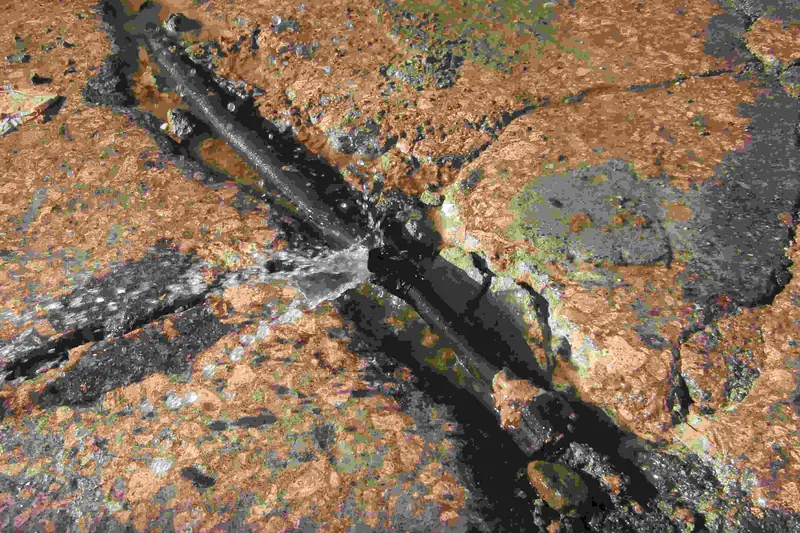
Because the concrete hides the pipe, a slab leak usually shows itself indirectly. The signs of a slab leak include a water meter that keeps turning with every tap closed, a warm patch of floor over a hot-water line, damp flooring and a water bill that climbs without a change in habits.
What causes a slab leak in Gulf South soils?
Slab leaks in the Gulf South come from two forces working on the same pipe: ground that moves, and pipe that wears from the inside. Neither is unique to the region, but soft, wet soils make the first one more common here than in places built on rock.
The New Orleans area is sinking. A NASA Jet Propulsion Laboratory study published in May 2016 measured subsidence of up to 2 inches a year at Michoud and up to 1.6 inches a year behind the Bonnet Carré Spillway. It noted "notable subsidence" in Metairie and the Upper and Lower 9th Ward without giving a rate, and named groundwater pumping and dewatering as the main causes.
Clay soils add a second kind of movement. Expansive clay swells when it is wet and shrinks when it dries, so a slab can be lifted and dropped unevenly through the seasons. A 2021 LSU study in Frontiers in Built Environment modeled Louisiana's average annual property loss from expansive soil at $66,231,136 in 2010 dollars (Mostafiz et al., 2021). The paper also cites a USDA estimate that about half of U.S. households are built on expansive soils, alongside an American Society of Civil Engineers estimate that about a quarter of U.S. homes are affected. The figure is a model estimate for all property damage, not a count of plumbing leaks.
When the ground under a slab moves, pipes that pass through the concrete or are held in fill can be bent, pulled at joints or rubbed against rebar and gravel. The page on foundation settlement and plumbing covers how that strain reaches the pipes.
The second cause is ordinary wear. Copper can thin and pinhole over decades, especially on hot-water lines where flow and heat are highest. Old cast-iron drains corrode from the inside. Poor original workmanship, such as a kinked line or a pipe left touching sharp fill, can fail years later without any soil movement at all.
Which pipes run under a slab house?
Two separate systems run under most slab houses, and which one is leaking changes the urgency, the test and the fix.
| Pipe | What it carries | When it leaks | Common materials |
|---|---|---|---|
| Main water service | City water from the meter into the house | All day, under street pressure | Copper, PEX or other plastic in newer work |
| Hot-water supply branches | Heated water from the water heater to fixtures | All day, under pressure; often warm | Copper in many older slabs; PEX in newer ones |
| Cold-water supply branches | Unheated water to fixtures | All day, under pressure | Copper or PEX |
| Drain and waste lines | Used water from sinks, tubs and toilets to the sewer | Only when fixtures drain | Cast iron in older houses; PVC or ABS plastic in newer ones |
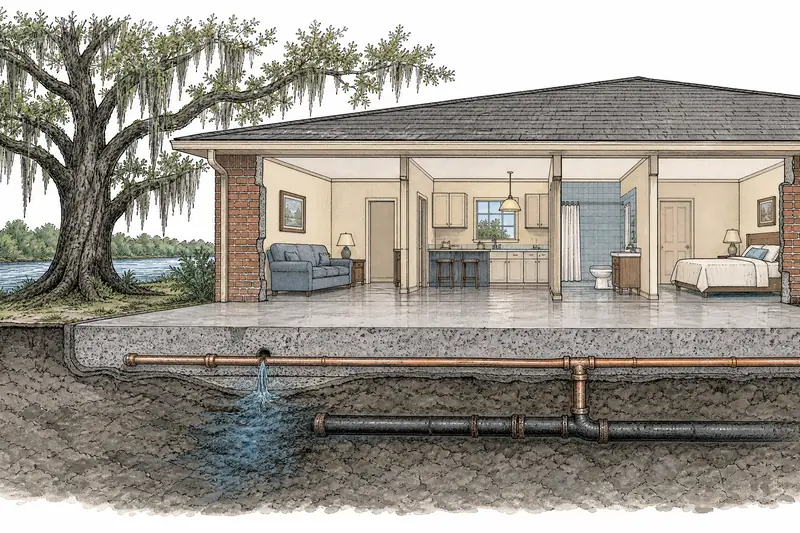
Supply lines are the ones that move the meter. A drain leak does not register on the water meter at all, because the water has already been metered and used. The slab leak detection page explains how a plumber tells the two apart with pressure and camera tests.
Is a slab leak an emergency?
A supply-line slab leak is urgent, because it runs every minute the main valve is open. A drain-line leak is usually slower and only active when water goes down the drains, but it can still wash out the soil under the slab over time.
Treat it as an emergency when water is surfacing through the floor, flooring is soaking or buckling, or the meter is spinning fast with every tap off. In those cases, close the main shutoff valve and keep it closed between uses until a licensed plumber has located the leak.
A slower leak gives time to confirm it properly and collect quotes. Even a small one is worth acting on: EPA WaterSense estimates that the average household's leaks waste more than 9,300 gallons of water a year, and that 9 percent of homes have leaks wasting 50 gallons or more a day (EPA WaterSense, Fix a Leak Week). Under a slab, that water also goes into the soil that supports the floor.
What should you do first when you suspect a slab leak?
Start with the water meter, because it is free and settles the main question: is water leaving the system when nothing is turned on.
- Turn off every faucet, toilet fill, ice maker, irrigation zone and water-using appliance.
- Read the meter, wait two hours without using any water, and read it again. EPA WaterSense says any change means there is probably a leak.
- Close the house's main shutoff valve and watch the meter's flow indicator. If it keeps moving, the leak is likely in the service line between the meter and the valve, not under the house.
- Rule out the easy culprits: a running toilet, a dripping hose bib, a leaking water heater relief valve.
- Photograph damp spots and warm areas, and note the dates.
- Call your homeowners insurer before any floor is opened, and ask how access and repair costs are handled.
The Louisiana Department of Insurance's consumer guide to homeowners insurance counts a sudden release of water from household plumbing among the perils broad-form policies cover, and it lists earth movement among the usual exclusions. Coverage depends on the wording of your policy; the page on whether homeowners insurance covers slab leaks goes through the questions to ask.
How are slab leaks fixed?
There are four common fixes, and the choice depends on where the leak is, what the pipe is made of and how many leaks the house has had.
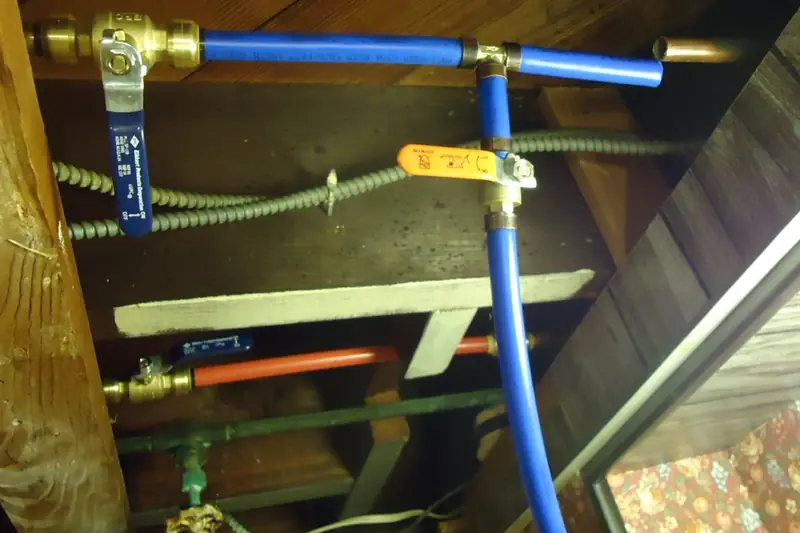
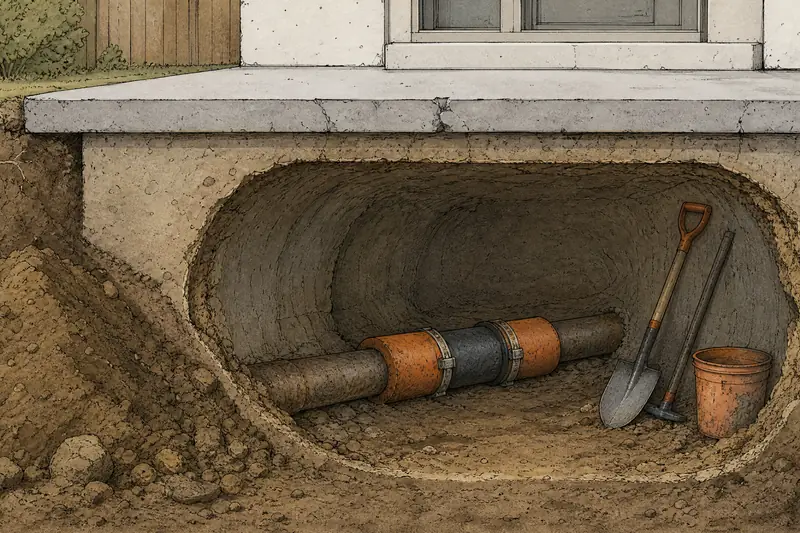
A spot repair opens the slab directly over the leak, replaces the damaged section and patches the concrete. It is the most direct route when the leak has been pinpointed and the rest of the line is sound. Tunneling reaches the pipe from outside the house by digging under the slab, which leaves interior floors alone; see tunneling under a slab. A reroute abandons the buried line and runs a new one through the walls or attic, covered on the water line reroute page. A repipe replaces most or all of the supply lines, usually after repeated leaks.
Plumbing work in Louisiana is licensed by the State Plumbing Board of Louisiana, which issues master, journeyman and residential plumber licenses. Inside New Orleans, any job that takes out or swaps water piping or a fixture needs a plumbing permit. The city's building-permit guidelines say the Sewerage and Water Board issues those permits and that the applicant must be a master plumber holding an Orleans Parish license (City of New Orleans). The Louisiana plumbing code page explains how the state's rules work now.
Only national figures exist for prices. In Fixr's spring 2025 cost guide, most repairs land between $1,000 and $4,000, and the typical bill is around $2,500. The slab leak repair cost page breaks that down by repair method.
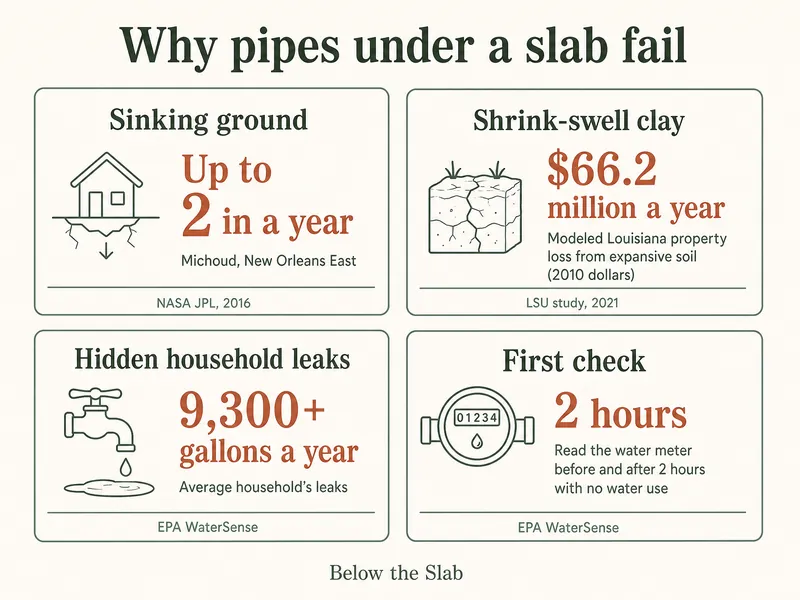
Slab leak numbers from primary sources
- 2 in/yrHighest subsidence rate in the New Orleans area, at MichoudNASA JPL, May 2016
- $66.2MLSU model of yearly Louisiana property damage from shrink-swell soil, in 2010 dollarsMostafiz et al., LSU, 2021
- 9,300+ galWater wasted a year by the average household's leaksEPA WaterSense
- 2 hoursNo-use window for the water meter leak testEPA WaterSense
How we put this page together
This page is based on the NASA Jet Propulsion Laboratory's 2016 subsidence study, the LSU expansive-soils risk study (Frontiers in Built Environment, 2021), EPA WaterSense leak guidance, the Louisiana Department of Insurance's homeowners guide, the license categories on the State Plumbing Board of Louisiana site and New Orleans' building-permit guidelines; each was reviewed in October 2026. Prices are Fixr's national survey figures, with name and date given; they are not quotes for jobs here. Not included: forum anecdotes, contractor marketing claims, pipe lifespans in years and any local price, because none could be confirmed from a primary source.
Common questions
Can a slab leak cause foundation damage?
It can contribute. Water running into the soil under a slab can soften clay or wash out fill, which may let part of the slab settle. The reverse is also true: a slab that is already moving can break the pipe. A structural engineer, not a plumber, is the person to judge the foundation itself.
Do newer slab houses get slab leaks?
Yes, though the causes differ. Newer houses often have plastic supply lines that do not pinhole the way old copper can, but soil movement, damaged fittings and installation mistakes still cause leaks. Age changes the odds, not the possibility.
Is a slab leak the same as a foundation leak?
Not quite. A slab leak is a leak in a pipe under or in the slab. Water that comes in through cracks from outside, such as after heavy rain, is a drainage or grading problem, not a plumbing leak, and it does not move the water meter.
Will the water utility find a slab leak?
The utility is responsible for its side of the meter. Pipes on the house side, including those under the slab, are generally the owner's to find and repair. A sudden jump in usage on the bill is often the first sign, so compare recent bills with the same months last year.
How long can a slab leak go unnoticed?
A small drain leak or a slow supply leak can run for months before flooring or the bill gives it away. The two-hour meter test catches supply leaks long before damage shows, which is why it is worth doing whenever the bill looks high.
Can the house keep using water while waiting for a repair?
Many owners close the main shutoff between uses to limit the water lost, then open it briefly to shower or cook. If the leak is on the hot side only, a plumber may be able to isolate the water heater supply as a stopgap. Ask before relying on either.
Does a slab leak always mean breaking the floor?
No. Tunneling reaches the pipe from outside, and a reroute skips the buried pipe entirely by running a new line overhead or through walls. Which option makes sense depends on where the leak is and how much of the line is worth keeping.
Related guides
More guides: the slab house plumbing guide home page.