
Sewer & drains
Sewer Backup: Causes, Cleanup and Prevention
A sewer backup happens when wastewater can't get out of the house line or the city main, so it rises through the lowest drain; a blocked lateral is the usual cause, and heavy rain is the other.
On this page
Key takeaways
- EPA estimates at least 23,000 to 75,000 sanitary sewer overflows a year in the US, not counting backups into buildings; blockages, line breaks and storm water leaking into sewers are leading causes.
- New Orleans' sewer system is 1,450 miles of gravity sewers fed by 82 pumping and lift stations, according to the Sewerage and Water Board.
- For sewage cleanup, CDC says to wear rubber boots, rubber gloves and goggles, keep children and pets away, and dry the home within 24 to 48 hours if possible.
- FEMA recommends sewer backflow valves on pipes entering the building, installed by a qualified, licensed plumber.
- Standard Louisiana homeowners policies exclude water that backs up through sewers or drains, per the Louisiana Department of Insurance; coverage needs an endorsement.
A sewer backup is one of the few plumbing problems that is also a health problem. Wastewater coming up through a shower drain or toilet carries bacteria, and on a slab house it spreads straight across the floor. This page covers why backups happen, what to do in the first hour, how to clean up safely, and what prevents the next one.
What causes a sewer backup?
A sewer backup is caused by a blockage or restriction between the house and the city sewer, or by a city main that is too full to take more flow. The EPA's sanitary sewer overflow page lists blockages, line breaks, sewer defects that let storm water and groundwater overload the system, power failures, poor sewer design and vandalism as causes, and notes that overflows can back up into homes.
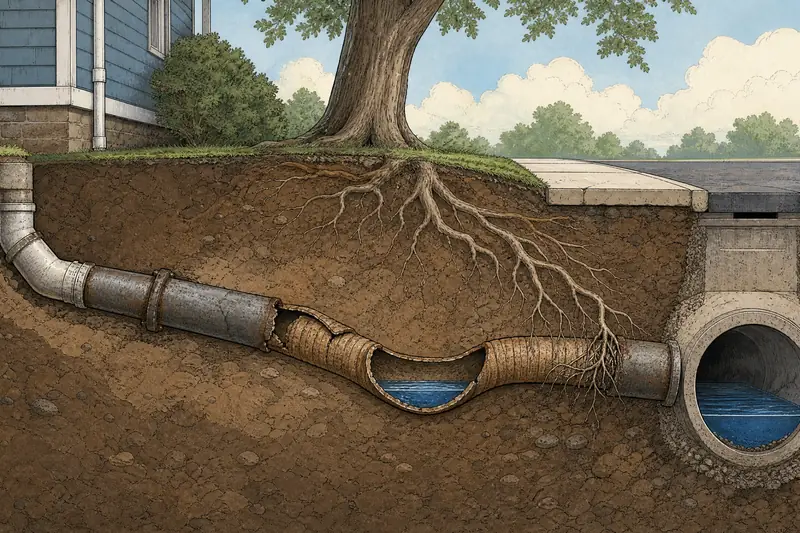
On the house side, the usual culprits are grease, wipes and paper caught on a rough joint, tree roots in the sewer line, a sag or belly that collects solids, and older pipe that has cracked or collapsed. A clue to which side it is on: if only one fixture backs up, the clog is in that branch. If the lowest drains in the house fill when a toilet flushes or the washer drains, the main house line is blocked.
On the city side, the cause is often a blocked or overloaded main. If neighbors are having the same problem at the same time, or sewage is coming out of a manhole in the street, report it to the Sewerage and Water Board right away; its wastewater issues page asks residents to report even a suspected sewer overflow.
Why do sewers back up during heavy rain?
Sewers back up in heavy rain because storm water gets into pipes that were built to carry only wastewater. The Sewerage and Water Board describes two routes on its wastewater issues page: inflow, from direct connections between the sewer and drainage systems, and infiltration, where defects in pipes or manholes let water in. Its diagram of the problem also shows broken laterals and uncapped cleanouts as entry points.
When enough rain enters, the mains fill and the water has to go somewhere. It rises to the lowest openings it can reach: a manhole in the street, or a floor drain or tub in a low house. Slab houses built close to grade are more exposed than raised houses, because their drains sit closer to street level.
The city's sewer system has been under a federal consent decree since 1998, entered with the EPA and the U.S. Department of Justice, and modified in 2010, 2013 and 2014, according to the Sewerage and Water Board. Its sewer rehabilitation program, SSERP, was estimated at $600 million over ten years. A homeowner's part is smaller but real: SWBNO's FAQ says homeowners are responsible for maintaining their sewer cleanouts, so keep the cap on and intact.
What should you do during a sewer backup?
During a sewer backup, stop putting water into the drains, keep people and pets away from the water, and find out whether the problem is in your line or the city's. Every flush, shower and washer cycle adds to what comes up through the floor. Turn off the washing machine and dishwasher and ask everyone in the house to stop using water.
If the water is near outlets, appliances or extension cords, do not walk through it; switch off power at the breaker only if you can reach the panel while standing somewhere dry. Then check the cleanout outside, usually a capped pipe near the foundation. If it is full of water, the blockage is downstream, toward the street. If it is dry, the blockage is between the house and the cleanout.
Then call for help. A licensed plumber can clear the house line and should film it afterward with a sewer camera inspection to find the cause. If the city main is the problem, report it to the Sewerage and Water Board and document everything with dated photos. SWBNO's claims page lists what a claim needs, including photos, proof of insurance and three repair estimates, with documents due within five months.
How do you clean up after sewage safely?
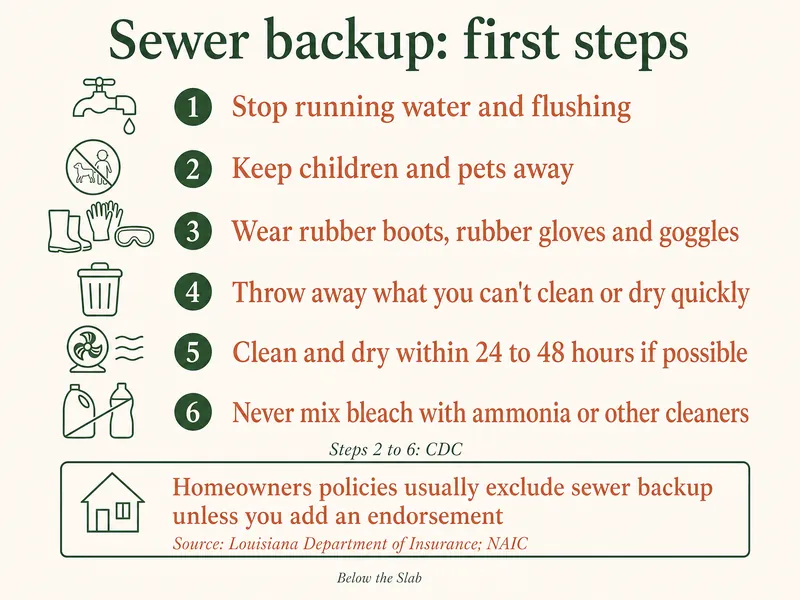
To clean up after sewage safely, wear protective gear, remove what cannot be cleaned, disinfect hard surfaces and dry everything fast. CDC's cleanup guidelines say to wear rubber boots, rubber gloves and goggles if sewage is involved, and to keep children and pets away until cleanup is done.
CDC's other points, in order:
- Throw away anything you can't clean or dry quickly, such as mattresses, carpeting and books.
- To make a bleach cleaner, mix 1 cup of household bleach with 1 gallon of water. Never use bleach in a closed space, and never mix it with ammonia or any other cleaner.
- Clean up and dry the home within 24 to 48 hours if possible, to limit mold.
- Wash with soap and water when you are done, and seek medical care if you are injured or become sick.
Large backups, or any that soak drywall, are a job for a cleanup contractor. Before anything is thrown out, photograph it for the insurer, and keep a list with rough ages and values.
| Situation | Likely cause | Who handles it |
|---|---|---|
| One fixture backs up | Clog in that branch drain | A licensed plumber, or a plunger for a simple clog |
| Lowest drains fill when water runs | Blocked house sewer line | A licensed plumber; camera inspection afterward |
| Cleanout is full of water and neighbors have the same problem | Blocked or overloaded city main | The Sewerage and Water Board (in New Orleans) |
| Backup during a heavy rain or street flooding | Storm water overloading the sewer | The utility, plus a backwater valve to prevent repeats |
| Sewage on carpet, drywall or furniture | Any of the above | Cleanup contractor and your insurer |
Does a backwater valve stop sewer backups?
A backwater valve stops most sewer backups from the city side, because it lets wastewater flow out but closes when water tries to flow back in. FEMA's flood protection guide recommends sewer backflow valves for all pipes entering the building, says they allow water to flow in only one direction, and advises having a qualified, licensed plumber install them. Its preparedness list includes closing backflow valves before an expected flood.
Destrehan, Louisiana, requires backflow valves in all new construction, and FEMA's case study of the town says a single valve should cost less than $30. That figure is the valve part alone, not an installed price: on a slab house, fitting one usually means cutting into the building sewer outside the foundation. The same case study encourages periodic checks and cleaning out the valve as needed.
A backwater valve does nothing for a clog in your own line, since that water is coming from the house. It is a cousin of the drinking-water devices covered in the backflow prevention guide, but it protects the building from sewage rather than the water supply from the building.
Sewer backup figures
- 23,000-75,000Sanitary sewer overflows a year in the US, not counting backups into buildings (EPA estimate)EPA
- 1,450 miLateral and trunk sewers in the New Orleans gravity systemSewerage and Water Board of New Orleans
- 82Pumping and lift stations moving New Orleans sewageSewerage and Water Board of New Orleans
- <$30One backflow valve, part only, in FEMA's Destrehan case studyFEMA
Does insurance cover sewer backup?
Standard homeowners insurance usually does not cover sewer backup unless the policy has a sewer and drain backup endorsement. The Louisiana Department of Insurance's consumer guide lists water that backs up through sewers or drains among standard exclusions, alongside flood and earth movement. The NAIC's home insurance guide says backup coverage is available as an endorsement and that homeowners policies don't cover flood.
When a backup comes with street flooding, the lines blur. Flood damage falls under flood insurance, which the LDI guide notes usually has a 30-day wait before it takes effect, so it cannot be bought once a storm is forecast. Ask your agent how your policies split sewer backup, flood and surface water, and what the endorsement's limit is.
Two practical points: the endorsement usually pays for the water damage, not for clearing or repairing your own sewer line, and the NAIC reminds owners that a homeowners policy isn't a maintenance contract. The insurance guide for slab leaks explains the same sudden-versus-gradual split for supply-line leaks.
How we put this page together
This page draws on EPA's sanitary sewer overflow page (updated April 2026), the Sewerage and Water Board's wastewater overview, wastewater issues, consent decree, FAQ and claims pages, CDC's guidelines for cleaning safely after a disaster (updated August 2026), FEMA's flood protection guide and Destrehan case study, and the Louisiana Department of Insurance and NAIC homeowners guides, all checked in October 2026. Left out: installed prices for backwater valves, counts of past New Orleans backups, and cleanup-company figures, none of which had a primary source.
Common questions
Why does sewage come up in the shower or tub first?
Water rises to the lowest open drain in the house, and on a slab house that is often a shower, tub or floor drain. It is a sign the main house line or the city main is blocked, not that the shower drain is.
Can heavy rain cause a sewer backup even if my line is clear?
Yes. When storm water leaks into the city's sewers through defects and improper connections, the mains can fill and push wastewater back up house lines. A backwater valve is the usual protection.
Is it safe to stay in the house after a sewer backup?
Keep children and pets out of the affected area until cleanup is finished, as CDC advises. Large backups, or ones that soak drywall and carpet, often need a cleanup contractor before rooms are used again.
What should go on the sewer cleanout?
A secure cap. SWBNO says homeowners are responsible for maintaining their cleanouts, and its wastewater page shows uncapped cleanouts as one way storm water gets into the sewer.
Does a sewer backup endorsement pay for the plumber?
Usually it pays for the water damage, not for clearing or replacing your own sewer line. Read the endorsement's wording and limit, and ask your agent before a claim.
Where is a city sewer problem reported in New Orleans?
Use the Sewerage and Water Board's online report form or its 52-WATER line. Report sewage coming from a manhole, or a backup that several neighbors share, right away.
Keep reading

More guides: the Below the Slab home page.